
Mussels
Florida’s Freshwater Mussels and Clams
Florida’s freshwater bodies support more than 60 species of mussels and clams. These animals usually inhabit shallow, sandy bottoms of lakes and streams. Their filter-feeding activity improves water quality by removing bacteria, algae and organic material. Florida’s freshwater mussels and clams are also an important food source for many fish, birds and mammals.
Sixteen Florida mussel species are federally listed as threatened or endangered. These listed species are found from the Suwannee River system north and west to the Georgia and Alabama borders. The Florida's Freshwater Mussels and Clams brochure provides illustrations and other information about these listed species and others found in Florida's freshwater systems.
To learn more, read the full brochure.

Our freshwater researchers are dedicated to protecting freshwater mussels, which are important for the health of Florida’s rivers and streams. Since the program began, biologists have conducted over 1,300 separate surveys and have recorded nearly 148,000 individual mussels.
In 2024 the team completed 56 surveys in six different river basins. They collected 5,768 individual mussels, representing 36 different species. In addition, they found shells from two additional species. Among the mussels collected, 767 individuals are federally endangered or threatened species. These rare mussels belonged to 8 out of the 16 protected species found in Florida.
Most of the surveys took place in the Escambia and Ochlockonee river basins. In the Escambia basin, biologists focused on areas they hadn’t studied before, like Pine Barren Creek and the Delaney River. In the Ochlockonee basin, they checked on the population of a rare species called the Ochlockonee Moccasinshell.
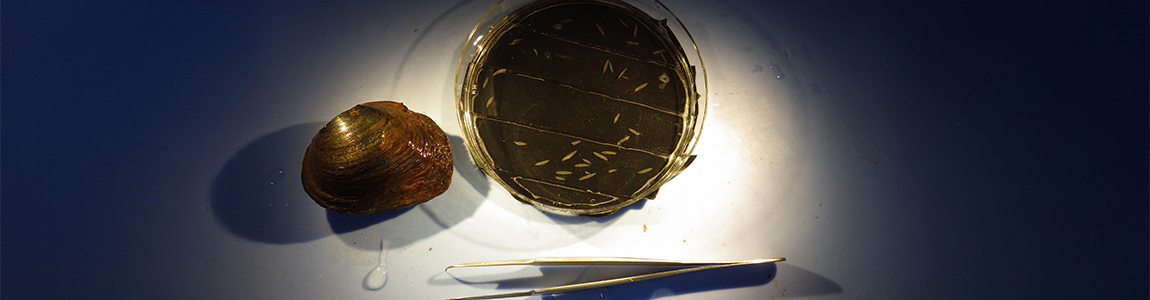
The program also made progress in efforts to help the Ochlockonee Moccasinshell population. Working with state and federal partners, they tried to raise this species in captivity. They located female mussels and collected their larvae, which were then taken to national fish hatcheries. There, the larvae were placed in shared tanks with the Blackbanded darter, which the mussels need as a host to develop into juveniles and spread to new habitats. Some of the larvae successfully changed into juvenile mussels, and these young mussels will keep growing until they are ready to be released back into the Ochlockonee basin.
Scientists are still working to estimate the current population of the Ochlockonee Moccasinshell, learn more about their preferred habitats, and identify the best places to release the juvenile mussels in the future.
Freshwater Mussel Gravidity Almanac (FMGA)
Access the Freshwater Mussel Gravidity Almanac
A crowd sourcing project for the compilation of standardized data on the reproductive timing of Florida’s native freshwater mussel species. The FMGA is a tool for biologists, managers, and enthusiasts to contribute to authenticated temporal and spatial data. The availability of these data will contribute to future research, conservation, and recovery efforts.
Freshwater Mussel Gravidity Submission Form
The public can contribute records by submitting them here. This submission form can be accessed through the phone application or on a desktop computer. After your record is reviewed and validated, it will be incorporated into the Freshwater Mussel Gravidity Almanac page (see link above).
Download the Record Upload Template
Large pre-existing datasets can be submitted by downloading the excel template above, rather than submitting records individually through the application. Follow the instructions for formatting, and email the template to Susan.Geda@MyFWC.com. Any questions or concerns may also be directed here.
Video: Standardizing a Non-Lethal Method for Characterizing the Reproductive Status and Larval Development of Freshwater Mussels (Bivalvia: Unionida)
Freshwater mussel conservation is dependent on monitoring reproductive patterns and processes of species. This study standardizes a non-lethal protocol for sampling gill contents, characterizing larval development, and providing a digital repository for data collected. This protocol-database package will be an important tool for mussel researchers in recovery of imperiled species.