
Grass Carp
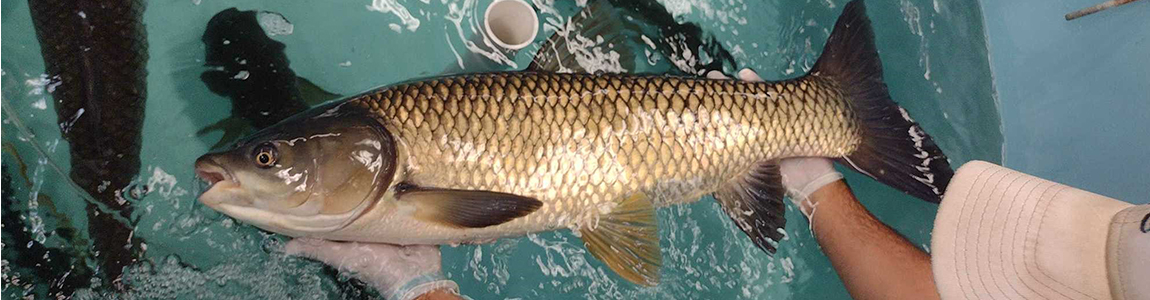
Grass Carp Research and Information

Managed introduction of Grass Carp (Ctenopharyngodon idella) is used as a biological control strategy for Hydrilla (Hydrilla verticillata) in Florida lakes, while recognizing potential concerns regarding impacts to native flora and fauna. To inform management decisions regarding their introduction, a radio-telemetry study was conducted to evaluate Grass Carp habitat use, movement, emigration, and survival within a large, open system of connected water bodies. Grass Carp were tagged and stocked in Lakes Apopka and Yale in 2022, and in Lakes Apopka and Parker in 2023.
Study results indicate that Grass Carp dispersed lake-wide within two weeks of stocking, moving from initial release sites to areas with high concentrations of Hydrilla. These findings support the use of centralized stocking locations while still achieving system-wide Hydrilla control. Across all study lakes, more than 80% of Grass Carp detections occurred within Hydrilla, indicating a strong association with the target species and suggesting limited impacts to native vegetation when substantial Hydrilla is present.
Adult Grass Carp exhibited low emigration rates (less than 12%) in systems where inter-lake movement was possible during a high-flow event in summer 2022. Under typical water levels, emigration was not observed, as water control structures effectively limited movement between lakes. Overall, Grass Carp demonstrated widespread dispersal from stocking locations, a strong preference for Hydrilla-dense habitats, and low emigration rates in larger systems equipped with fish barriers.
To improve the precision and effectiveness of Grass Carp management, additional evaluation of juvenile mortality will be incorporated into future efforts.